Tutorials, links, and ideas for making clothes and accessories for babies and small children - and a few other bits!
Welcome to my Blog
I am a grandmother to 4 little girls. I blog about the things I make for them, review patterns, provide tutorials on how I've dealt with techniques or problems, which I hope may help others, and give links to the (mostly) free patterns I use. Every so often, I do a 'Best of..' post listing the best free patterns I've found under specific headings - babies, girls, boys etc. Enjoy the Blog!
Wednesday, 28 March 2018
Springtime skirts
A quick, short post this time. I made 4 skirts in 2 days before our family holiday with all the grand-daughters.
As you can see, three of them were made with purchased waistband elastic (which I'd had to get from the US). I've got slightly mixed feelings about this, which I'll reflect on below. But it certainly made them quick to make, at least the top right and bottom left, which are both made from stretchy knit fabric. More about how I made them below.
Friday, 15 December 2017
Winter trousers ideal for skating 2017
The latest winter trousers. One of my grand-daughters really doesn't want to wear trousers - she's sooner wear a dress every day, no matter the weather - preferably as close to a tutu as possible. This makes her parents despair, as it gets colder and colder. Ok, then, I thought, I'll try and make you a really feminine pair of trousers that will keep your warm! She loved this vaguely Parisian fabric, and I'm pleased to say, she has worn the trousers I made from it, albeit oftentimes with a dress over the top. But at least her knees aren't getting frostbite!
To find out more about making cosy warm trousers for winter, read on!
Sunday, 5 November 2017
My Free Patterns
Check them out below.
Friday, 3 November 2017
Free Pattern for Baby / Toddler Bolero or Waistcoat
A number of times, I have wanted to make one of the grandchildren a little waistcoat, either for dressing up, or as a little bit of extra warm or style. Each time, I've made my own pattern, so I thought it was time to share the patterns. This would be suitable for a boy or a girl.
BEFORE YOU CUT:
Above you have the links to the pattern, in 2 pages. It's free, and it shows a one inch square so you can check the printed size is correct. If it isn't, you could use some squared paper and redraw it. On the two pages of the PDF, BOTH SIZE PATTERNS ARE SHOWN. Pattern #1 is the smaller one, for approximately 9-15 months (more about sizing later). Pattern #2 is for approximately 18-24 months. However, boleros are quite forgiving, size wise, as they don't tightly enclose the chest, and the length doesn't need to be exact, either. I suggest if you have a small person to make a bolero for, you measure the patterns down the back fold, and across the back armpit to fold. Then measure your small person from neck to waist or hip, and from armpit to armpit. Halve the latter measurement. Then see which of the patterns looks the best match, depending on whether you will need a seam allowance.
Free Pattern - CLICK HERE for the first page and
CLICK HERE for the second page.
BEFORE YOU CUT:
Above you have the links to the pattern, in 2 pages. It's free, and it shows a one inch square so you can check the printed size is correct. If it isn't, you could use some squared paper and redraw it. On the two pages of the PDF, BOTH SIZE PATTERNS ARE SHOWN. Pattern #1 is the smaller one, for approximately 9-15 months (more about sizing later). Pattern #2 is for approximately 18-24 months. However, boleros are quite forgiving, size wise, as they don't tightly enclose the chest, and the length doesn't need to be exact, either. I suggest if you have a small person to make a bolero for, you measure the patterns down the back fold, and across the back armpit to fold. Then measure your small person from neck to waist or hip, and from armpit to armpit. Halve the latter measurement. Then see which of the patterns looks the best match, depending on whether you will need a seam allowance.
For the tutorial and more information, read on.
Tuesday, 17 October 2017
Free PDF Patterns for Children and Babies
I've thought for a long time about committing my research for free patterns to a post, but I've always been too busy using them to make clothes for the grandchildren to find time to write about them. I did manage one post a while back with my (then) favourite free patterns. Those were all ones I'd used over and over again for my grandchildren.
But I really want to make an attempt now to produce something that would be useful to others looking for free patterns for babies and children. It will take several posts. I have several hundred links on my spreadsheet, and there are several worksheets on it covering dresses and tops, pants and trousers etc. Then there are all the different sizes. Where to start?
To find which I think are some of the most useful web sites, and links to them, read on. Please recognise I have put a lot of work and research into my patterns reviews, so please don't just copy it all into your own web site without acknowledging the source. Thank you.
But I really want to make an attempt now to produce something that would be useful to others looking for free patterns for babies and children. It will take several posts. I have several hundred links on my spreadsheet, and there are several worksheets on it covering dresses and tops, pants and trousers etc. Then there are all the different sizes. Where to start?
To find which I think are some of the most useful web sites, and links to them, read on. Please recognise I have put a lot of work and research into my patterns reviews, so please don't just copy it all into your own web site without acknowledging the source. Thank you.
Wednesday, 11 October 2017
Replacement Padded Covers for Baby Car Seat or Buggy Straps
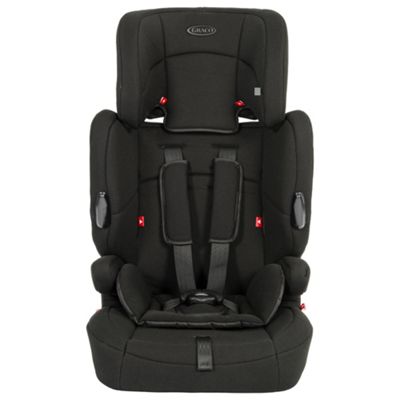
When my daughter found to her delight that she was pregnant again for the second time, it was time to get Jane's old car seat out of storage. Oh dear! One of the covers that should wrap round the shoulder strap to protect the baby from the strap chafing had gone missing.
It wasn't actually this model car seat, but you can see the padded covers for the straps clearly on this picture as they should be. Two of them.
So the next sewing request was for a new set of strap covers. (A set, because, of course, you want them to match.) To find out how I made these (easy as pie), read on.
Easy Sunglasses (or Glasses) Case
In the middle of packing a holiday case (yes, I'd left it that late) I realised that none of the cases I had were big enough in depth for either of my two favourite pairs on sunglasses.
So I had to make a new case, pronto. It had to be able to protect my sunglasses in the suitcase, and when out and about, but I didn't want it to be too heavy.
I knocked up this case in about 7 minutes. You could do a much better job in 15, but I didn't have 15 minutes available!
Friday, 6 October 2017
The Fat Quarter Challenge
I have always tried to squeeze as much as possible into the material I have. Probably comes from my Mum, who lived through the hardships and shortages of the Second World War. Her favourite recycling mantra was 'make do and mend', and she never threw anything away. So I recently took it as a personal challenge to see what I could make from fat quarters. With a new grand-daughter expected any day now, I thought I would start there.
A fat quarter is a small piece of material which is effectively a quarter of a square yard of fabric (or metre, if you are lucky). So they are popular with quilters, who can cut several six to nine inch (15-20 cm) squares from each. In practice, few bolts of material these days are exactly a yard or metre wide: 41"-42" or 112cm are the standard for the types of cotton and poly cotton from which most fat quarters are cut. So a fat quarter is usually more like 18" by 21". Hence the name 'fat' quarter, I suppose.
Here's what I made recently from a few fat quarters: a kimono wrap dress or nightdress for newborn; a sun hat, a diaper cover, a play suit for c 3 months, and a circular skirt age c 3 months. You can find out more about squeezing tiny garments from a minimal amount of material below. Of course, if you have just a tiny bit more fabric, it will be a little easier!
A fat quarter is a small piece of material which is effectively a quarter of a square yard of fabric (or metre, if you are lucky). So they are popular with quilters, who can cut several six to nine inch (15-20 cm) squares from each. In practice, few bolts of material these days are exactly a yard or metre wide: 41"-42" or 112cm are the standard for the types of cotton and poly cotton from which most fat quarters are cut. So a fat quarter is usually more like 18" by 21". Hence the name 'fat' quarter, I suppose.
Here's what I made recently from a few fat quarters: a kimono wrap dress or nightdress for newborn; a sun hat, a diaper cover, a play suit for c 3 months, and a circular skirt age c 3 months. You can find out more about squeezing tiny garments from a minimal amount of material below. Of course, if you have just a tiny bit more fabric, it will be a little easier!
Subscribe to:
Posts (Atom)